Two Vision Zero wins over the last week
Two encouraging developments for road safety and active transportation in the HRM demonstrate how thoughtful advocacy, evidence-based recommendations, and public engagement can influence the conversation about how our streets are designed and managed.

Much of our time as an advocacy network for Vision Zero is spent highlighting the challenges facing people who walk, roll, cycle, and use transit in the HRM, and not forgetting vehicle occupants, who are too often involved in serious and fatal crashes. The last week, however, has given us two reasons for optimism.
1. Active Transportation Advisory Committee advances Vision Zero recommendations
In August 2026, members of Vision Zero Kjipuktuk-Halifax presented to the Active Transportation Advisory Committee (ATAC) about our Before The Crash report. At this meeting, a motion was proposed recommending that the Transportation Standing Committee (TSC) take action to strengthen HRM’s approach to Vision Zero. This motion was formally adopted by ATAC at their meeting on 22 October 2026 (p.3).
This is an important milestone, particularly considering the disturbing trends from the 2026 HRM Road Safety Annual Report, released in September 2026 and discussed here.
The ATAC motion calls for the adoption of a target to achieve zero fatalities and serious crashes by 2035, the development of a comprehensive Vision Zero action plan, and further examination of opportunities to strengthen HRM’s approach to road safety, improve collaboration between interest holders, identify infrastructure improvements, and explore how Vision Zero principles can be more fully embedded and actioned within municipal decision-making. You can read the full motion here (p.3).
While the motion does not immediately implement these recommendations, it represents an important opportunity for the TSC to provide essential leadership and direction on Vision Zero, if they vote to adopt it.
2. Council refers the AAA Bicycle Network Report for further review
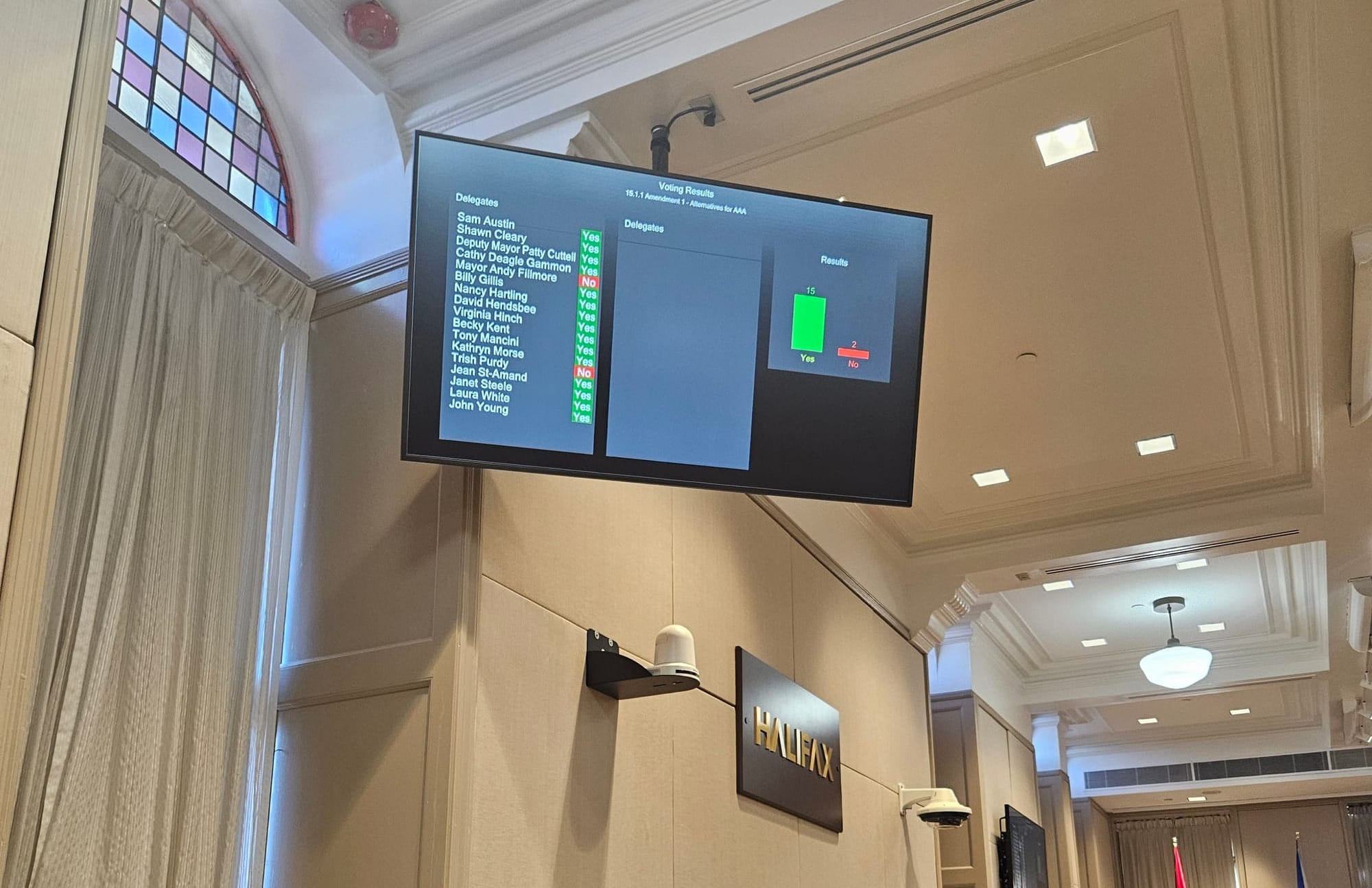
The second positive development came at the Regional Council meeting held on Tuesday October 27, 2026, where councillors voted to refer the report on the Regional Centre All Ages and Abilities (AAA) Bicycle Network to both ATAC and the TSC for additional review and consultation.
This report, quietly released on the previous Friday and then buried in the Consent Agenda, proposed downgrades of the long promised but still not delivered AAA bicycle network, effectively making specific segments less safe or more indirect to ostensibly save money while potentially increasing risk to users. Alongside the Halifax Cycling Coalition Advocacy Committee submission, our members mobilised to draft a letter to Councillors and the Mayor. We argued that, given the potential implications for safety, accessibility, equity, and transportation options, the report required further scrutiny before Council made any decisions. Members also participated in a silent “sit-in” at the Council meeting, wearing bicycle helmets as Council debated this agenda item.
The majority of Council agreed that changes to one of Halifax's key transportation commitments deserve a transparent and evidence-based discussion, requiring input from users. Referring the report to committee allows that discussion to take place without further delaying the network segments under review, which are not slated for construction until 2028. While not ideal, given that completion of the AAA bicycle network has been significantly delayed, doing so allows users and advocates to push back on any downgrades to the AAA status of the network.
Thank You!
At first glance, neither of these decisions may seem dramatic but together they create space for better decision-making:
- The Vision Zero motion acknowledges that serious and fatal collisions are preventable and that Halifax should achieve safer roads by adopting Vision Zero fully, requiring more robust planning and a Goal to achieve zero fatalities
- The AAA network referral recognises that changes to long-standing transportation commitments deserve careful review and meaningful input by users
A big thank you to the Councillors and ATAC membership who supported these two actions, and to the community volunteers and advocates who give their time to participate in local democracy. While there is still much work ahead, we have seen in both examples how constructive advocacy can help move important conversations forward. We'll continue working with residents, community partners, advisory committees, and elected officials to advance the vision that brought our network together in the first place - A HRM where no loss of life is acceptable on our roads.