Speed cameras, road safety, and the politics of evidence
Speed cameras aren't a cash grab. The evidence shows they save lives.

The recently released Nova Scotia Traffic Safety Act includes several welcome improvements over the outdated Motor Vehicle Act. One notable exception, however, was the decision by the provincial government not to permit municipalities to implement automated speed enforcement (ASE) measures such as speed cameras.
This was a surprise to the HRM, who had developed a detailed photo enforcement feasibility study in 2022, on the understanding that photo enforcement would be legalised in the Traffic Safety Act.
The provincial government pointed to developments in other jurisdictions, including Ontario, where Premier Doug Ford has described speed cameras as a “cash grab” and suggested that other traffic-calming measures would be more effective. However, no evidence has been presented to support abandoning ASE in favour of alternative approaches, and traffic fatalities have increased this year in Ottawa and Toronto after speed cameras were removed.
In this article, we ask: why does the “cash grab” argument resonate so much with members of the public and why is there such a striking disconnect between the politics of ASE and the extensive evidence of its effectiveness?
According to the 2026 Road Safety Annual Report, which we also wrote about here, speeding remains one of the most common traffic violations in the HRM. Only 38% of vehicles on sampled major collector and arterial roadways were complying with posted speed limits in 2025, down from 45% in 2024 (p.17, KPI 6). If compliance with any other safety law were this low, it would be viewed as a serious public policy failure. Yet when it comes to speeding, widespread non-compliance has become normalised.
This normalisation of driving infractions reflects what researchers call motonormativity, an unconscious bias that leads people to judge harms associated with driving more leniently than equivalent harms in other contexts. Research suggests people are often willing to tolerate risks, pollution, and rule-breaking when they involve motor vehicles, even when they would object to similar behaviours elsewhere.
Motonormativity helps explain society's tolerance for speeding for some vehicles over others. For example, e-scooters and e-bikes are subject to strict regulations governing maximum speed and power output and proposals to expand their use often generate intense public debate about safety risks. Yet speeding is routinely excused as normal driving, despite being a major contributing factor in the occurrence and severity of road crashes. The distinction reflects less about risk itself and more about how deeply car use has been normalised within our culture.
Effective speed management saves lives
Even modest reductions in vehicle speeds can reduce the risk of death and serious injury for people inside and outside of vehicles. Further, the evidence for the effectiveness of ASE is remarkably consistent. A review of 35 studies found reductions in speeding, collisions, and serious injuries wherever speed cameras were introduced. Around camera locations, crashes declined by 8% to 49%, while serious injury and fatal crashes declined by 11% to 44%. Similar conclusions have been reached through a systematic review published in the British Medical Journal as well as reviews by the U.S. National Highway Traffic Safety Administration and the UK College of Policing. Across jurisdictions and study designs, the findings point in the same direction; ASE reduces speeding and prevents injuries and deaths. It is therefore no surprise that organisations responsible for road safety – police leaders, municipalities, road safety advocates, and researchers - have consistently argued in favour of ASE.
When politics trumps evidence
The biggest contradiction surrounding the “cash grab” narrative is that if generating revenue were the primary objective, continued widespread speeding would be desirable. Yet the goal of ASE, and of the broader Vision Zero approach, is to achieve the opposite - to encourage drivers to slow down and comply with the law. The success of a speed camera program should therefore not be measured by the value of fines collected, but by reductions in speeding, collisions, and injuries.
Any revenue collected could also be re-invested into road safety interventions, particularly infrastructure changes that make it harder for people to reach excessive speeds. Some jurisdictions have even experimented with reframing ASE entirely. Sweden's widely publicised "Speed Camera Lottery" rewarded drivers who obeyed speed limits by entering them into a lottery funded by fines paid by speeders. The idea attracted attention because it shifted the focus from punishment to behaviour change. Regardless of whether one agrees with the approach, the underlying principle is the same as Vision Zero, with the aim of creating conditions for safer driving.
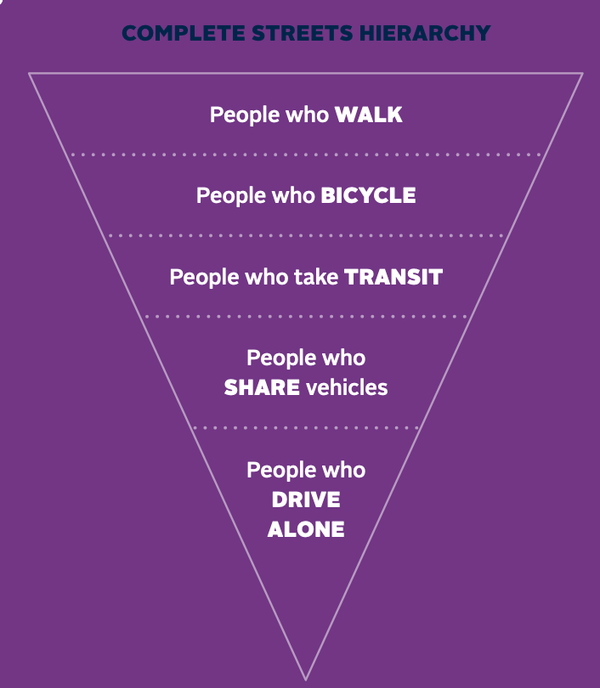
For Nova Scotia, the debate over speed cameras should focus less on revenue and more on outcomes - do they reduce injuries and deaths? Decades of international research suggest they do. Of course, ASE is not a substitute for good road design, traffic calming, safe crossings, or complete streets. It is one tool among many. However, it is a tool supported by a substantial body of evidence. ASE works by changing behaviour. If speeding doesn’t decline when ASE is used, that’s a failure of policy, road design and enforcement, not a cash grab.
Countering the cultural assumption that speeding is somehow different from other forms of illegal and potentially harmful behaviour is an important element of Vision Zero. Decisions about road safety tools should be guided by evidence, not myths. The evidence on ASE is clear: it reduces speeding, prevents crashes, and saves lives. If governments choose not to use it, they should be prepared to explain why they are rejecting one of the most extensively studied safety interventions available.