Six Critical Questions Council must ask before downgrading Halifax's AAA Bicycle Network
When protected routes become indirect routes and AAA standards are weakened, it is children, seniors, people with disabilities, and those without cars who pay the price.
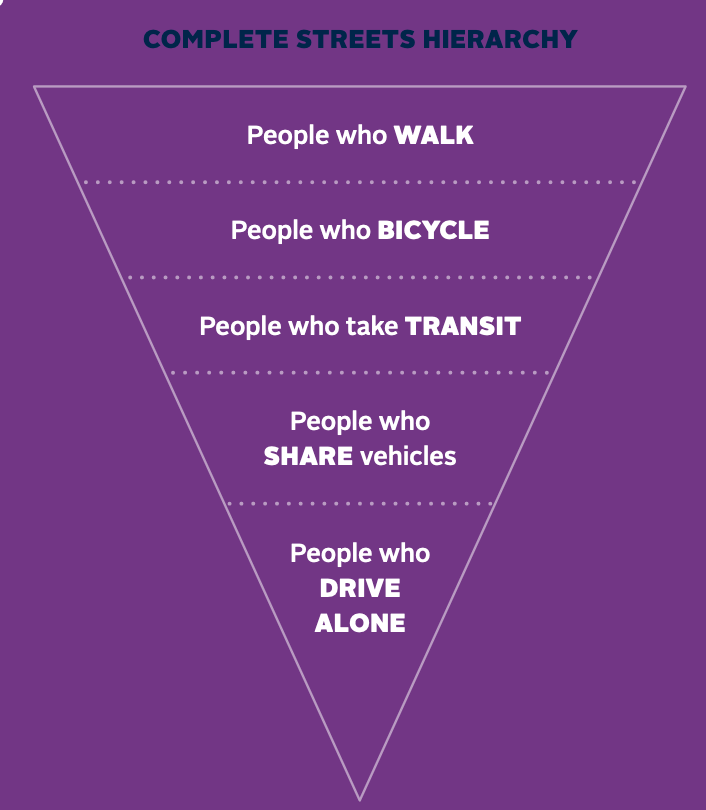
Tomorrow, Halifax Regional Council will consider a staff report that could fundamentally change the vision, quality, and delivery of the Regional Centre All Ages and Abilities (AAA) Bicycle Network. Below is the contents of an email we sent today to HRM Councillors and the Mayor outlining our concerns regarding this report.
"Our members have significant concerns with the report being presented at Regional Council on Tuesday October 27, 2026 regarding the Halifax Regional Centre All Ages and Abilities (AAA) Bicycle Network (item no. 15.1.1). We urge you to send this report to the Active Transportation Advisory Committee (ATAC) and the Transportation Standing Committee (TSC) for further consideration and to engage other interest holders in a meaningful way before accepting this report. Our reasons for this request are outlined below.
Downgrading our IMP and Strategic Plan core commitments
A report with a significant reversal of a long-standing Council commitment to build an AAA bicycle network is being sent to Regional Council without the opportunity for detailed public examination through the ATAC and the TSC. This is essential, given the proposed downgrading of the AAA standard and introduction of indirect routes that will materially impact users of the network and potentially deter further use. An AAA bicycle network was reconfirmed as a Key Theme just last year in the IMP update: “Continued prioritization of key AT initiatives including the Regional Centre All Ages and Abilities (AAA) bicycle network” .
The suggested outcomes in the report to use indirect routes and downgrade protection specifically does not meet the Complete Streets Hierarchy (attached) that is a pillar of the IMP - breaching that high level policy commitment and a core commitment in our 2026 to 2030 Strategic Plan (Outcome MB-04: Improve Safety of Transportation Modes).
We also flag the decision to adopt equity as a fifth pillar to the IMP. The impact of downgrading an AAA network on historically underserved groups are not acknowledged or addressed in the report.
Decisions that will materially alter our High Level transportation strategy require transparent review and public discussion before Council is asked to act.
Given the threat to the AAA designation of some segments of the long-delayed AAA bicycle network, this engagement must include children and their families, people with disabilities who cannot drive, and seniors who are most vulnerable to any downgrading of the AAA bicycle network. These groups account for around a third of HRM residents and deserve a voice on these decisions.
Key Objectives Not Met
Residents were promised a connected cycling network capable of serving people of all ages and abilities, which means protecting them from the biggest risk to them on the roads - motor vehicles. The focus of this report is on reducing costs and implementation challenges. There is comparatively little discussion of whether the final product will still achieve the key policy objective Council originally endorsed, which is a safe and accessible network that meets the needs of users.
There is no context on the safety issues that require protection through an AAA network, that is the year-on-year sharp increases in cyclists and micromobility crashes in HRM, which in 2025 were almost double the number of crashes in 2023, see Figure 2, page 4.
A network that is only 60% completed, remains disconnected, and increasingly relies on lower-comfort facilities contradicts available evidence and best practice and cannot reasonably be considered equivalent to the connected AAA network that remains a key IMP delivery commitment.
Cost escalation deserves scrutiny. However, as a Coalition dedicated to improving road safety using the Complete Streets Hierarchy as an orientation lens, we are increasingly concerned that cycling infrastructure is subjected to a degree of financial examination and deprioritization that other transportation expenditures, such as road maintenance, never face.
When road reconstruction projects become more expensive, for example the 757% increase in projected costs for the Windsor St Exchange, or when the municipality absorbs the expensive ongoing costs of maintaining roads that are wider than required, these expenditures are treated as necessary. Yet comparatively modest investments in active transportation frequently face demands for justification that are rarely applied to (for example) excess width roads that could be repurposed or even sold for housing.
Critical Questions
We would like Council to consider 6 critical questions before accepting any reduction in the scope, quality, or timeline of the AAA network:
1. Staff report that the estimated cost of the AAA network has increased from approximately $25m to approximately $93m. Has staff prepared a quantitative breakdown of this increase that shows how much is attributable to cycling infrastructure versus land acquisition, utility relocation, accessibility improvements, inflation, broader street reconstruction, and measures undertaken to maintain existing motor vehicle capacity? If such a breakdown exists, will it be made public and provided to Council prior to any decision on network scope and service levels?
2. Where projected costs are tied to the need to preserve existing roadway configurations, has staff evaluated alternative designs that more fully reflect the IMP Complete Streets Hierarchy, including reduced lane widths, lane reallocation, changes to parking provision, or other approaches that prioritize walking, cycling, and transit? If so, what cost and service-level implications were identified? For example, consideration of narrower traffic lanes on Bell Road where projected costs are high and an indirect route is proposed.
3. The report acknowledges that replacing AAA infrastructure with non-AAA alternatives may require amendments to funding agreements and approval from federal and provincial partners. Has HRM received written confirmation that the proposed departures from AAA standards will not jeopardize current or future funding commitments? If not, what assessment has been undertaken of this risk, and why is it not explicitly discussed within the report's Risk Considerations section?
4. What evidence has staff reviewed regarding route choice behaviour among people of different ages and abilities when indirect cycling routes are provided instead of direct facilities on major corridors? Has staff assessed whether the proposed alternatives are likely to attract comparable levels of use, comfort, and safety as the direct AAA routes originally approved by Council?
5. What assessment has been undertaken of the safety, climate, mode-shift, congestion, public health, and transportation-equity implications of delaying or reducing portions of the AAA network, and how do those impacts compare with the financial savings identified in the report?
6. Given the substantial increase in projected costs, repeated delays to implementation, and the need to revisit previously approved network segments, what lessons has HRM identified regarding project management, governance, design review, and capital planning? What specific changes are being implemented to improve delivery, cost control, and accountability for future active transportation projects?
We encourage Council to consider whether this report aligns with its own strategic goals, given that HRM declared a climate emergency in 2019, and adopted high level policies prioritising sustainable transportation, climate action, road safety, and housing affordability.
Delivering a Key Transportation Network
A high-quality active transportation network is not a luxury - it is core public infrastructure that helps reduce congestion, provides affordable transportation options, improves public health, and contributes to safer streets. As acknowledged in our IMP, active transportation infrastructure is significantly cheaper to implement and maintain than infrastructure dedicated to motor vehicles.
At some point, Council must decide whether the AAA network remains a genuine municipal priority or whether it is being downgraded through years of delay, deferral, scope reduction and scapegoating. We urge you to reject this report and continue implementation of the AAA bicycle network as the IMP intended".
We encourage you to share your own concerns with your own Councillor regarding the impact that downgrading the AAA bicycle network would have on your safety and comfort while using active transportation. You can do that easily via this link from the Halifax Cycling Coalition.