From intersections to school crossings, the evidence for a Vision Zero approach just keeps on mounting
A new school-crossing study builds on earlier research which examined near-miss incidents involving people walking and wheeling across Canada, including Halifax.
In July 2026 we released our first near miss report based on 100 resident responses over two months. In it we cited a national study by the Canadian Automobile Association and Miovision conducted in 2025. That study created Canada's largest database of pedestrian and cyclist near misses, documenting more than 600,000 conflicts over a seven-month period and demonstrating that serious near misses occur at busy intersections every day. Researchers found that approximately one high-risk or critical near miss occurs for every 770 pedestrian crossings and every 500 cyclist crossings.
Importantly, the intersection study challenged the traditional reliance on collision statistics as the primary measure of safety. Instead, it demonstrated a Safe System and Vision Zero approach by treating near misses as critical indicators of future harm. As the authors noted, collision data are inherently reactive, while near-miss data help identify locations that point to persistent street design issues.
The same team has just released a study of school crossings and its results are both concerning and predictable. The team examined 30 school crossings in 11 Canadian cities, including Halifax, and again found that street design played a decisive role in safety outcomes. Crossings with signals, stop signs, or roundabouts experienced dramatically fewer conflicts than uncontrolled locations, while visible school-zone treatments and lower vehicle speeds were associated with reduced risk.
What can we learn from these two studies?
First, near misses occur far more frequently than reported collisions, making it critical that these data are routinely collected and used to inform decision-making. These are incidents that are waiting to happen (remember, there are no accidents).
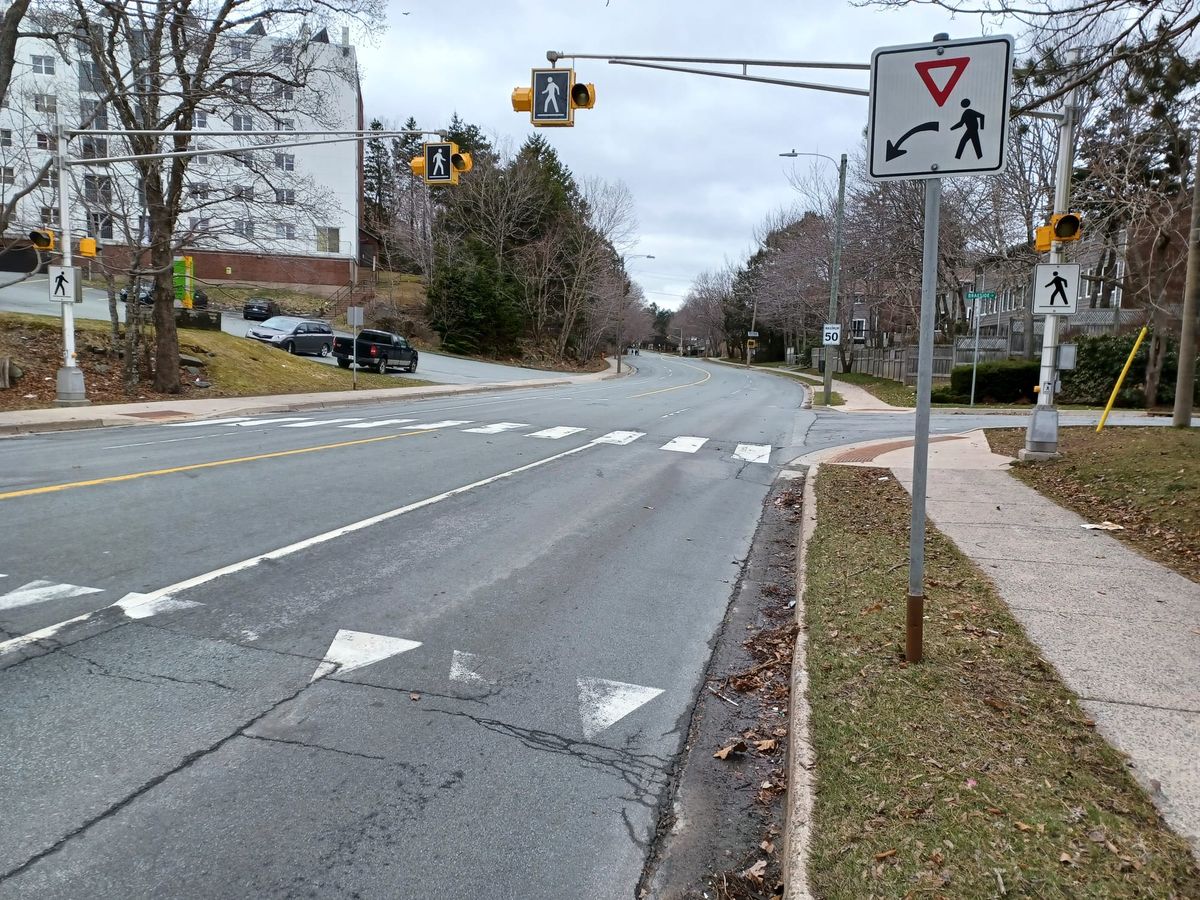
Second, turning vehicles represent a disproportionate source of danger to vulnerable road users. The 2025 intersection study found that right- and left-turning vehicles accounted for nearly 90% of serious pedestrian conflicts. The crosswalk in our feature image above illustrates this - it is located immediately after a side-street intersection on a wide, 50 km/h road. Drivers exiting the side street must simultaneously watch for traffic and pedestrians, increasing the risk of missed pedestrian conflicts, while the long crossing distance and lack of a refuge island further increase pedestrian exposure.
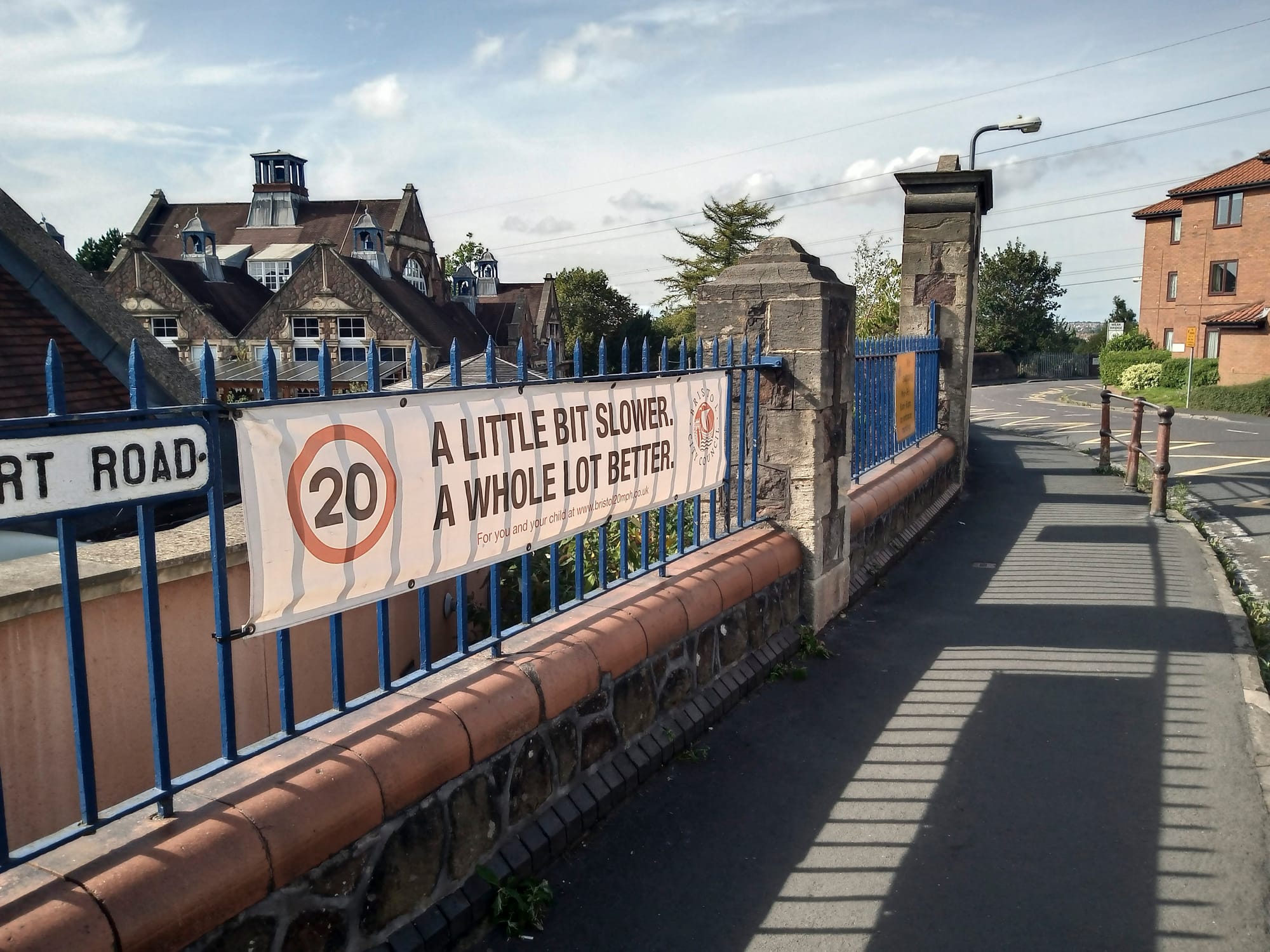
Third, and already known but often ignored, road design and infrastructure influence safety outcomes. Features such as protected turning movements, effective traffic controls, reduced speeds, or crossings that are raised or include a refuge island are associated with improved safety for children and are routinely implemented across Europe, as seen in the image below.
Actions speak louder than words
We’ve shared concerns like this before, where HRM's approach to Vision Zero and road safety do not align with best practices. This growing body of Canadian research offers an important lesson and one that underpins the existence of our Vision Zero network – that no loss of life is acceptable on our roads. We know where the dangers lie for people walking, wheeling, rolling or driving. We have the tools to assess those risks. What we need is for our elected officials and bureaucrats to act on the evidence before another resident, of any age, pays the price.
The next Transportation Standing Committee on Thursday November 26, 2026 will be an important test of HRM’s commitment to a true Vision Zero approach. A motion advanced by the Active Transportation Advisory Committee based on our advocacy, is due to be tabled. While the agenda is not yet public, there will be an opportunity to speak at that meeting - you can learn more here about how to participate. With a new slate of councillors joining the TSC this is an opportunity to set the direction for a more effective Vision Zero approach. Please also share this article with your elected officials, offering your support for this motion or adapt our template with your own experiences and concerns. Together we can make the HRM a safer place to move around in, whatever our mode of transport.