New records released in fatal Dartmouth crosswalk collision
Newly released records from Halifax Regional Police provide additional details about a February 27, 2026 crash at the intersection of Wyse Road and Boland Road in Dartmouth that resulted in the death of a pedestrian who was legally crossing.
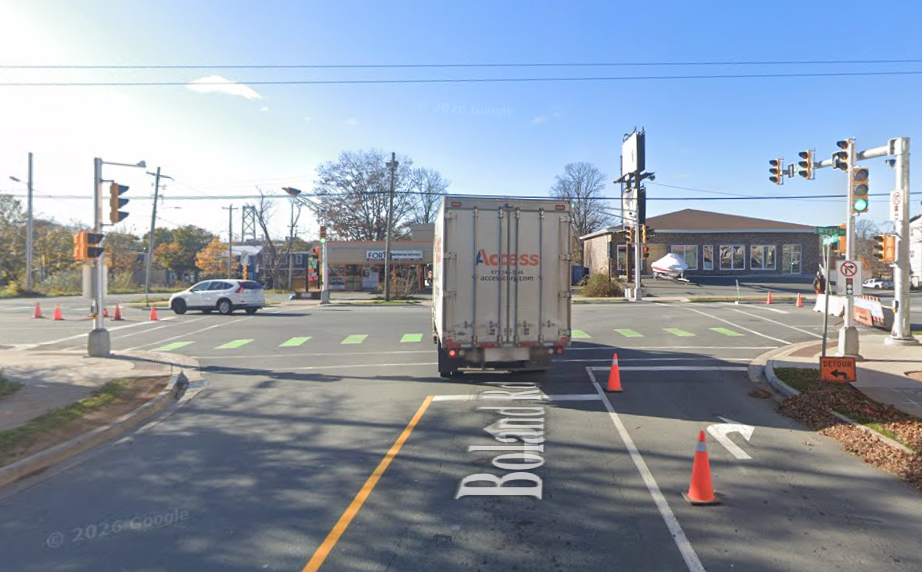
The records were released following a Freedom of Information and Protection of Privacy (FOIPOP) request, file HRP-ARG-26/27-00105, seeking information about the crash, which was identified by police as case 32004.
According to the records released by Halifax Regional Police:
- The driver of the vehicle was turning left from Boland Road onto Wyse Road.
- The pedestrian was struck in a crosswalk.
- The “Walk Light” was activated when the pedestrian was struck.
- The pedestrian was subsequently transported to hospital and later died from injuries sustained in the collision.
- The driver was issued with an SOT for “failure to yield to a pedestrian”, which at signalized intersections results in a fine of $180 for a first offence: Section 93(20)(h)
- The Collision Reconstruction Unit reviewed the file and concluded “There is nothing in the file that indicates that this was criminal in nature”.
There are no records of any other charges, including that of careless and imprudent driving under section 100 of the Motor Vehicle Act. The open data crash entry states aggressive driving was a factor causing the fatal crash.
The FOIPOP request also sought information concerning the driver's actions, the road onto which the vehicle turned, the circumstances of the crosswalk collision, and details concerning any fine or enforcement action. Halifax Regional Police granted partial access to the requested records, with some information withheld.
The newly released information raises important questions about pedestrian safety at signalized intersections, the circumstances surrounding the driver's conduct and the enforcement response following the crash. An incident last month at a signalized intersection on Quinpool resulted in serious injuries to a senior pedestrian.
Pedestrians are vulnerable to drivers turning left on a green light, particularly as the movement can originate from behind them while they are in the second half of the crosswalk, like in the image below.
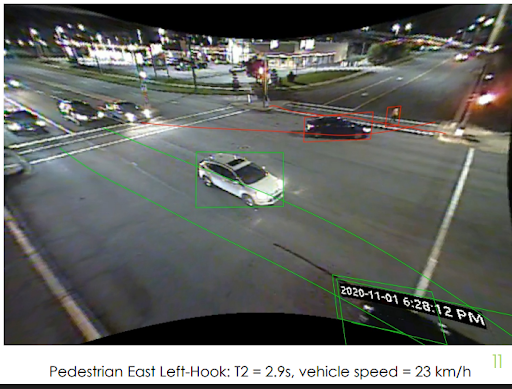
The fact that the pedestrian was struck by the driver in a crosswalk while the “Walk Light” was activated is particularly significant in assessing the circumstances of the collision and the safety of the intersection and others like it.
“Pedestrians crossing with a Walk signal must be able to have confidence that they can cross safely” said Martyn Williams of Vision Zero Kjipuktuk-Halifax.
“The public deserves a clear understanding of what happened in this case, what enforcement action was taken, and whether we can protect pedestrians from these kinds of crashes through measures like protected signal phasing (lights stay red for turning drivers) as shown here at Dunbrack/Washmill Lake Drive.”
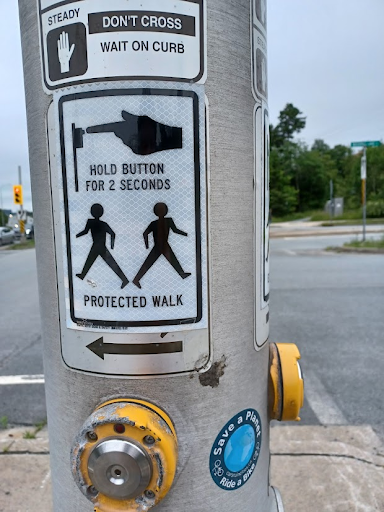
As the Province advances a new package of transportation improvements focused on traffic operations and vehicle movement, this collision serves as a reminder that efficiency cannot come at the expense of safety. We urge Council and the Province to ensure that all signalized intersections with significant pedestrian activity are assessed for protected left-turn phasing that separates vehicle movements from pedestrians crossing. We further recommend:
- Greater transparency on outcomes of investigating pedestrian fatalities. Key relevant details of deaths need to be released to the public.
- Routine public reporting on enforcement actions arising from serious injury and fatal crashes.
- Accelerated implementation of proven safety measures, including protected signal phasing at signalized intersections with significant pedestrian activity.
- A road safety plan that recognizes traffic deaths as preventable rather than unavoidable.
The FOIPOP disclosure (see file below) provides documentary evidence concerning the circumstances of the crash but does not, by itself, establish fault or liability. Further information may be required to determine the complete sequence of events and the enforcement outcome.